
Materials
Coral
The origin of coral has been shrouded in legend for centuries. Pliny the Elder in the “Naturalis historia” recognized coral as having a mythical origin; the blood that continued to drip from the severed head of the gorgon Medusa was transformed into coral. Its bright red color, marine origin, and ambiguous nature generated great attraction among the Mediterranean peoples who thus began to work it and use it as a precious ornament.
As early as the 1400s, Torre del Greco devoted itself to coral fishing, and Torre del Greco’s fishermen, strengthened by their centuries of experience, went as far as the African coast with their coral. But it was from the 1700s, thanks to the Bourbon dynasty, that the town of Torre began to become one of the most important poles of processing and production. The king, to encourage the development of craftsmanship, reduced the tax on imported raw coral, but failed to start a factory in the town, influenced by the French Revolution and the eruption of Vesuvius in 1794.
In 1800 Ferdinand IV of Bourbon succeded in opening the first coral factory in Torre del Greco. At that time, there was a shift from the manufacture of sacred elements to the manufacture of decorative and everyday items such as combs, clips, and jewelry that were increasingly in demand by the emerging bourgeoisie. Today coral worked in Torre del Greco, is exported all over the world especially to the Far East. There are several types with various shades of color ranging from red to white, brown and black, although Mediterranean coral is red. The most prized are the dark brown, with its dark red color, and the one with a pale and delicate pink color called “angel skin”.
Cameo
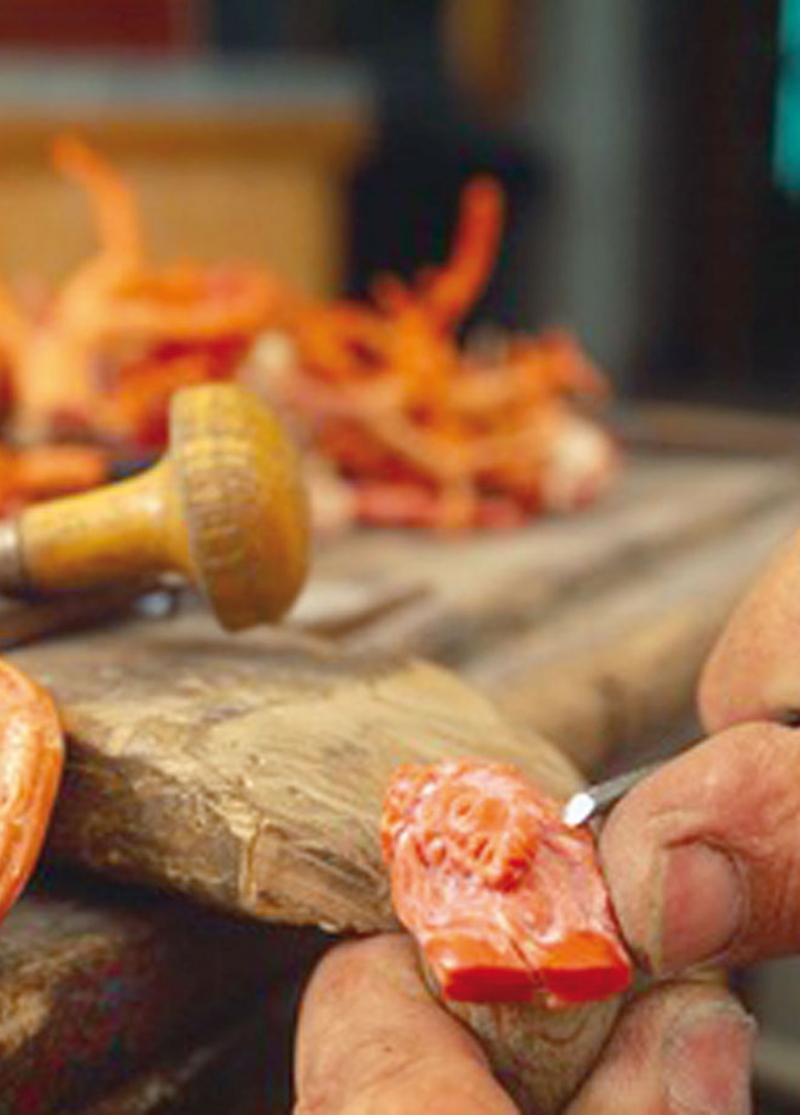
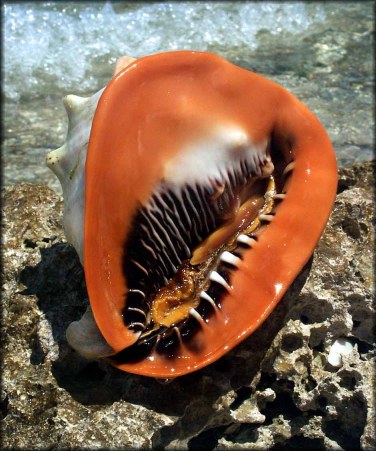
Thecammeo or cameo The cameo is a piece of jewelry made through the engraving of a layered stone or shell, particularly Cypraecassis rufa, Cassis madascarensis and Cassis cornuta as these shells of the Cassis family have a surface consisting of two distinct layers of color, which allows the relief figure to be clearly isolated from the background. To this day, cameo carving is still done by hand. The first stage of the workmanship is the selection of the shell suitable for engraving. Next comes the bursting, that is, the cutting of the most convex part of the shell, the “cup”; then we proceed to the marking and shaping of the cut piece: inside the cup we trace the contours of the cameos that we want to make and eliminate, by cutting them, the superfluous parts. Finally, we move on to aggarbatura, which involves giving the piece the desired shape (usually oval or round) using a special grinding wheel. At this point the obtained pieces are fixed on a wooden spindle with hot mastic composed of Greek pitch, wax and scagliola. After this operation, the work proceeds to scaling, that is, the abrasion of the outermost part of the shell so as to leave on the surface the clear layer to be engraved. The work then passes to the engraver, who draws on the surface the subject to be reproduced.
Turquoise
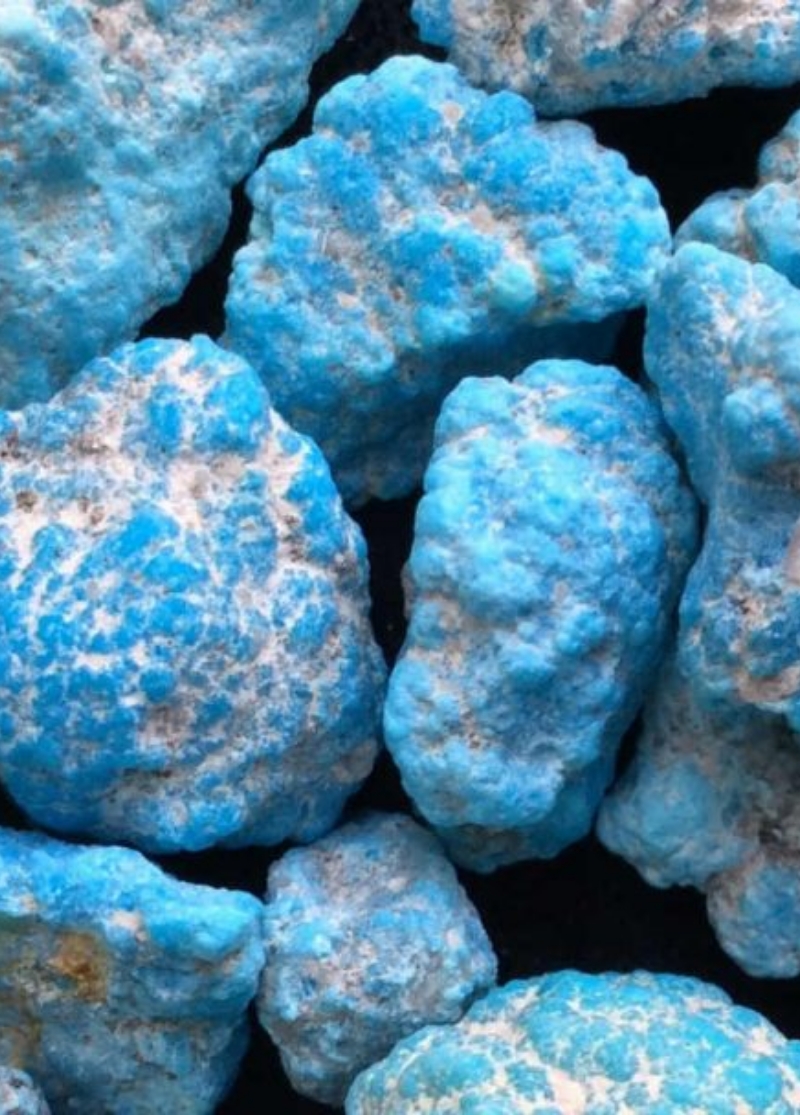
Turquoise is a blue-green mineral belonging to the triclinic system.Always opaque or barely translucent this gemstone may show a uniform blue color or brown or black limonite dendritic veins.Very rare in transparent crystals,it is always found in nodules or reniform microcrystalline masses or in thin veins within the embedded rocks.Its porosity causes easy alterations to the original color for this reason impregnation treatments are sometimes carried out for protective purposes. Turquoise is a mineral of secondary genesis and is formed as a result of the circulation of mineralizing solutions within sedimentary rocks especially sandstone or volcanic rocks.
Pearls
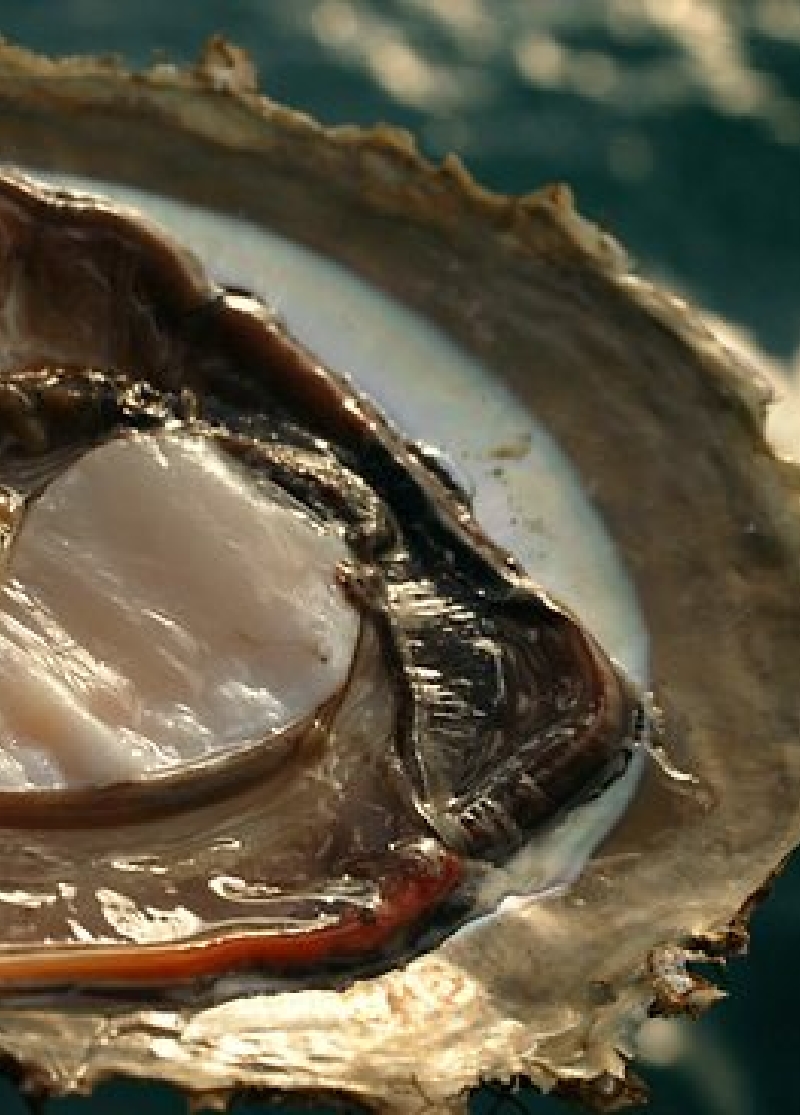
A pearl is a spherical structure consisting of calcium carbonate in crystalline form. The term “pearl” comes from the Latin word “pernula,” the name used to refer to the shell that contains it, and whose shape is reminiscent of a “pig’s leg.” To create pearls with special shapes, when the pearl is extracted from the oyster, a fragment of mother-of-pearl with the chosen shape is inserted, which the oyster will cover with successive layers of mother-of-pearl. The result is that, after years of waiting, the pearl that is born has the enlarged shape of the initial fragment. The most common color in pearls is white, but pink, cream, yellow, gray and black pearls can also be found. The value of pearls, however, is not only distinguished by their color, but also by their shape and luster, that is, the light they are able to reflect.

